
Beat Dash: Neon Rhythm
CodiPlayerMusic
0.00.00 Reviews
- Version
- 1.0.1
- Installs
- 500.00K
- Age Rating
- Everyone
Screenshots
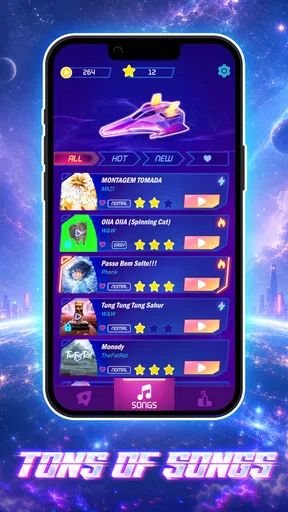
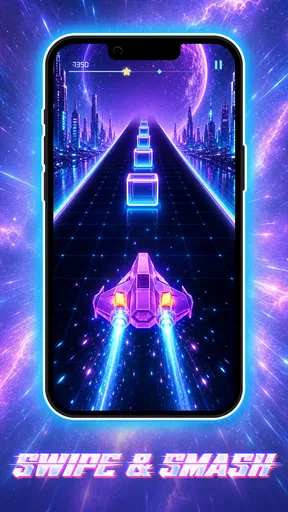
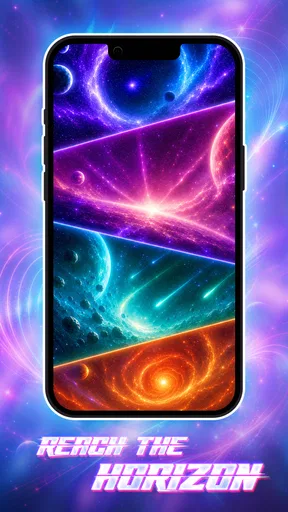
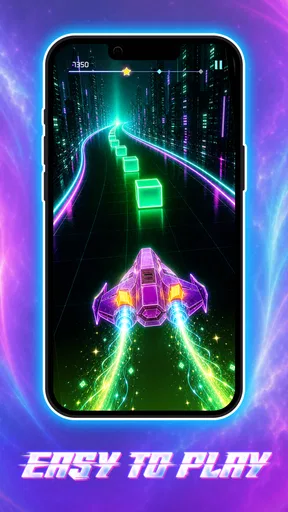
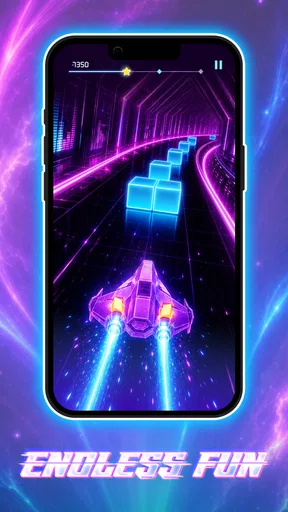
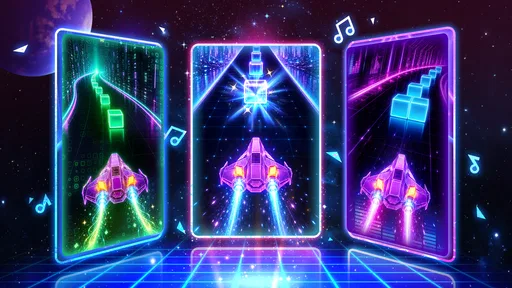

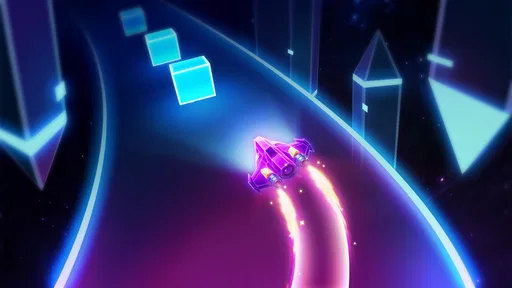
Our Review of Beat Dash: Neon Rhythm
 Analysis by Appyee
Beat Dash: Neon Rhythm is a free music game from CodiPlayer that puts one simple idea at the center: moving through a bright musical world while trying to meet each note at the right moment. I found that focus more important than the neon presentation itself. The game is not asking me to manage a large collection of systems or learn a complicated control scheme; it is asking me to listen, react, and keep my movement aligned with the track.
That makes it easy to understand within a few moments, but not automatically easy to master. A rhythm game lives or dies by how clearly it connects sound, timing, and visual movement. In my experience, Beat Dash: Neon Rhythm is most appealing when I want a short, active session rather than a long adventure. It feels suited to the kind of play where I pick up my phone, concentrate for a while, and stop after a few attempts with a better sense of timing than when I started.
Why the music-and-movement connection matters
The strongest capability here is the way the game turns music into a route through its world. Instead of treating the soundtrack as background decoration, it makes the rhythm the thing I watch and respond to. Every successful moment depends on paying attention to the relationship between what I hear and what appears in front of me. That gives each run a physical quality: I am not merely selecting notes from a menu, but trying to stay in motion while the track sets the pace.
This distinction matters if you have played more traditional music games. A tap-focused title can let me concentrate almost entirely on lanes, symbols, or a fixed interface. Beat Dash: Neon Rhythm asks for a wider kind of attention because the musical action is tied to flying through the environment. The result is more immediate and energetic, although it can also be less forgiving when visual effects compete with the beat.
The useful skill is not fast tapping alone; it is learning to predict the next musical moment. I get better when I stop reacting to each note as a separate surprise and start hearing the repeating pulse of a section. That is an important difference for new players. If a run goes badly, simply moving faster is rarely the best answer. Listening for the pattern before it reaches the screen is more effective.
The neon style supports that idea by making the playfield feel active and easy to follow at a glance. Bright colors can help a note stand out from the surrounding world, especially when I am already familiar with the rhythm. At the same time, visual intensity can become a weakness. Players who prefer quiet interfaces may need a short adjustment period before the scenery stops competing with the path.
What a first session feels like
My first approach to a game like this is deliberately cautious. I keep my attention on the next section rather than trying to anticipate the entire track. That prevents the common mistake of looking too far ahead, losing the immediate beat, and then making several errors in a row. Beat Dash: Neon Rhythm rewards this smaller field of attention because the experience is built around continuous timing rather than long strategic planning.
Once the basic movement begins to feel natural, I use the music as an early warning system. A change in the sound often tells me to prepare before the visual cue arrives. This is one of the more valuable lessons the game can teach: the screen confirms what the ears have already suggested. Playing with sound on is therefore much more important than treating the title as a silent visual challenge.
That also answers a practical question many mobile players have: can it work as a quick break? Yes, the central design is well suited to brief play because the objective is immediately understandable. I do not need to spend a long time studying menus before I can test my timing. The trade-off is that a short session can become repetitive if I am not interested in improving a run or replaying a musical passage.
A realistic everyday use case
I would use this game during a short commute, while waiting for an appointment, or after work when I want something more engaging than passive scrolling. In that situation, I would play with headphones if possible, start with a relaxed attempt, and use the next run to focus on one specific weakness: entering turns cleanly, staying with a faster section, or avoiding the temptation to chase visual effects.
That approach is better than measuring a session only by whether I finish successfully. Rhythm games can feel frustrating when every mistake is treated as failure, but a focused replay gives the session a clear purpose. I can leave after a few attempts knowing exactly what I was practicing. Beat Dash: Neon Rhythm works particularly well in this setting because its main attraction is immediate concentration rather than a large amount of preparation.
It is less suitable for playing in a noisy waiting room without headphones. The visual side can communicate part of the action, but the music is central to timing. I would also avoid judging it during a distracted session. Messages, conversations, or frequent interruptions undermine the very skill the game is built around, and that can make the controls seem worse than they feel when I am actually paying attention.
How the rhythm works in practice
The most effective way to play is to divide attention into three layers. First, I listen for the pulse. Second, I watch the immediate route rather than the whole screen. Third, I make small, deliberate movements instead of large corrections. This sounds simple, but combining the three is where the challenge appears. Overcorrecting after one missed note often creates the next mistake, so controlled movement is more useful than panic.
I also recommend learning a section through repetition rather than trying to memorize every event at once. On an early attempt, I listen for the general structure. On the next, I notice where the rhythm changes. After that, I work on keeping my movement smooth through the change. This staged method makes the game feel less random and gives a player a practical route toward improvement.
One non-obvious benefit is that the game makes audio awareness useful even when the screen becomes busy. I can use the beat to maintain a sense of direction when several bright elements appear together. That does not remove the need to watch carefully, but it gives me a second reference point. If I rely only on color or motion, a visually dense passage can feel confusing; if I combine those signals with the track, the same passage becomes more readable.
Another useful habit is to avoid playing at maximum intensity from the start. I get better results when my hands remain relaxed. Tension makes every correction larger, and large corrections are especially damaging in a game where timing and position need to agree. A calm grip also makes longer practice sessions more comfortable, even though the title itself is well suited to short bursts.
Players may wonder whether they need musical training. I do not think so. A formal background could help someone recognize patterns quickly, but the game teaches through repetition rather than requiring technical knowledge. What matters more is willingness to listen and retry. Someone with no rhythm-game experience can understand the goal quickly, while an experienced player will probably appreciate the challenge of converting familiar timing skills into movement through a world.
Where it differs from ordinary alternatives
Compared with a standard tap-lane music game, Beat Dash: Neon Rhythm feels more spatial. I am not only choosing the correct moment; I am also trying to maintain a clean route through the musical space. That makes it a better fit for players who want rhythm to feel active and kinetic. A lane-based alternative may be preferable for someone who values precise visual note charts, predictable hand positions, or a more analytical practice style.
Compared with an endless runner that merely uses music for atmosphere, this game gives the soundtrack a more meaningful role. The beat is not just there to make the run feel exciting. It is part of the timing problem. That makes the experience more focused, but it also means I cannot play it as casually as a runner where reflexes alone are enough.
The comparison also explains who should skip it. If you want a story-heavy music adventure, a deep character system, or a large strategic layer, this is probably not the right choice. Its appeal comes from the immediate loop of hearing, moving, missing, and trying again. Players who dislike repetition may find that loop narrow. Players who enjoy polishing a performance can find it satisfying precisely because the central idea stays clear.
The trade-offs behind the clean concept
Simplicity is both the game’s strength and its main limitation. Because the focus stays on flying through musical environments and meeting the rhythm, there is less room for distraction from a difficult passage. When I miss repeatedly, I cannot hide behind exploration or customization. That directness is refreshing for a focused game, but it can feel demanding when I am tired or playing without enough attention.
The neon presentation may also divide players. It gives the game energy and helps create a recognizable identity, yet bright motion can make timing harder for people who are sensitive to visual clutter. I would spend a few attempts learning which visual cues matter most instead of trying to process every effect. That small adjustment reduces the feeling that the screen is asking me to watch everything at once.
There is another trade-off between sound quality and convenience. Playing aloud can be fine in a private room, but headphones make the beat easier to follow in most situations. Headphones also make the experience more personal, which suits a game based on close listening. The downside is that I need to remain aware of my surroundings, especially when playing outside or during travel.
The game is free, which lowers the barrier to trying it. That is useful for curious players who do not yet know whether this style of rhythm game suits them. Free access does not change the basic question of fit, however. If I do not enjoy repeating a section to improve timing, the absence of an entry cost will not make the core loop more appealing. I would treat the free price as an invitation to test the experience, not as a reason to expect unlimited variety.
Who gets the most from Beat Dash: Neon Rhythm
I think the best audience is someone who likes music games but wants more movement than a conventional note lane provides. It also suits players who enjoy short sessions with a clear personal target. The target might be surviving a difficult sequence, keeping a steadier rhythm, or learning to use audio cues instead of reacting late to the screen.
It can be a good first step into rhythm games because the central idea is easy to explain: follow the music while moving through the world. Newcomers should still expect a learning curve. Understanding the objective is quick; performing consistently is not. I would encourage beginners to treat early misses as information, especially when they reveal that the problem is anticipation, overcorrection, or ignoring the sound.
More experienced rhythm players may enjoy the change in emphasis. Skills from tapping games can help with timing, but they do not solve the spatial part automatically. The game asks those players to loosen their dependence on fixed lanes and read movement as part of the musical phrase. That makes it a worthwhile change of pace, provided they are comfortable with a less chart-centered presentation.
Parents looking for an accessible music game may also find the presentation approachable. It carries an Everyone content rating, and the basic concept is easy to understand without complicated subject matter. I would still recommend that younger players use sensible volume levels and take breaks, since repeated concentration on fast-moving visuals can become tiring even in an otherwise approachable title.
On the technical side, the game supports devices running Android 6.0 or later. CodiPlayer lists the current release as version 1.0.1, and the project has already passed around half a million installs. Those details suggest that it is not an obscure experiment with no audience, while the version number also makes me approach it as a focused game that may still be developing rather than a huge, mature platform.
That expectation affects my recommendation. I would choose Beat Dash: Neon Rhythm for its central music-to-movement experience, not because I expect it to replace every other rhythm game on my phone. If I want a compact challenge that rewards listening and controlled reactions, it earns a place in my rotation. If I want extensive progression, a broad song library, or a calmer interface, I would look at alternatives built around those priorities instead.
My practical recommendation
Before deciding whether to keep it installed, I would give it several attentive sessions rather than one distracted try. Use sound, keep your eyes on the next section, and focus on one recurring mistake at a time. That method reveals the game’s real strength much faster than simply rushing through attempts. It also makes the difficulty feel more understandable, because improvement comes from changing a specific habit rather than hoping for luck.
I would recommend it to a friend who says, “I want a music game that feels like I am moving with the track.” I would not recommend it to someone seeking a deep narrative, a large management system, or a game that works equally well with the sound muted. Its identity is narrow, but the narrowness is intentional. When the rhythm, route, and visual motion line up, the result is lively and satisfying.
After spending time with it, my opinion is positive but specific: Beat Dash: Neon Rhythm is at its best when treated as a listening-and-reaction workout, not as a general-purpose mobile adventure. CodiPlayer keeps the idea direct, and that directness gives the game its strongest moments. The free entry point makes it easy to try, the Everyone rating keeps its presentation approachable, and the music-driven movement gives it a clear reason to exist beside more conventional rhythm titles.
If you enjoy improving through short, focused attempts, I think you will understand its appeal quickly. Put on headphones, relax your hands, and let the beat guide your decisions instead of chasing every bright detail. If that style of repetition feels rewarding, this music game can become a surprisingly effective way to turn a spare few minutes into active concentration.
Verdict
Strengths of Beat Dash: Neon Rhythm
- Responsive tap controls make songs feel engaging and satisfying.
- Neon visuals create a stylish arcade atmosphere during each run.
- Short sessions are convenient for quick play on mobile.
- Increasing difficulty offers a decent challenge for rhythm-game fans.
- The gameplay is easy to understand for newcomers.
Limitations of Beat Dash: Neon Rhythm
- Fast patterns can feel frustrating on smaller phone screens.
- Mistakes may be difficult to recover from during demanding sections.
- Extended play can become repetitive if the song selection feels limited.
- Bright flashing effects may bother players sensitive to visual motion.
- Progress may feel slow without frequent successful runs.
Other Releases by CodiPlayer
View All
Piano Music Heart: Pop Tiles
Music4.8

Rhythm Shooter: Phonk Rush
Music4.1
Similar Picks in This Category
View All
Tiles Hop Music & Ball Game
AMANOTES PTE. LTD.4.3

Magic Tiles 3™ - Piano Game
AMANOTES PTE. LTD.4.6

Real Piano
Bilkon3.7

Piano Game: Classic Music Song
Dream Tiles Piano Game Studio4.0

Smash Colors: Music Ball Rush
BADSNOWBALL HONGKONG LIMITED4.2

Piano Music Go-EDM Piano Games
Joy Journey Music Games4.5
Frequently Asked Questions
What is Beat Dash: Neon Rhythm, and how is the gameplay structured?
Beat Dash: Neon Rhythm is a fast-paced music game that combines rhythm-based tapping with endless-runner movement. As you progress through neon environments, you must follow the beat, avoid obstacles, and react quickly to changing patterns. The game is designed for short sessions but becomes increasingly challenging as songs speed up and levels demand more accurate timing and faster reflexes.
Does Beat Dash: Neon Rhythm require an internet connection to play?
The basic gameplay experience may be available offline, which is useful when you want to play during travel or without mobile data. However, some features can depend on an internet connection, including advertisements, online rankings, cloud-related functions, updates, and possibly additional content. It is best to launch the game online at least once and check which modes remain accessible when your device is disconnected.
Is Beat Dash: Neon Rhythm free to download, and does it include in-app purchases?
Beat Dash: Neon Rhythm can generally be downloaded without an upfront purchase, but free access may be supported by advertising and optional in-app purchases. Depending on the version, payments may unlock cosmetic items, remove ads, provide extra attempts, or offer other progression benefits. Review the store listing and your device’s purchase settings before downloading, especially if children use the device.
What devices are compatible with Beat Dash: Neon Rhythm?
Compatibility depends on the operating system, device model, and the minimum Android or iOS version required by the current release. Newer phones and tablets usually provide smoother performance, quicker touch response, and more stable frame rates during demanding sections. Before installing, check the official store page for supported software versions, required storage, and any device-specific limitations.
Is Beat Dash: Neon Rhythm suitable for beginners and younger players?
The game is easy to understand because its core controls are based on timing, tapping, swiping, or movement, but the difficulty can rise quickly. Beginners may need several attempts to learn each song and obstacle pattern. It can be enjoyable for younger players, although parents should review the age rating, advertisements, music, privacy information, and purchase controls before allowing unsupervised play.
Play our best games!


